Pain, bleeding, itching, swelling, or discomfort around the anus can be caused by several different conditions. Three common problems are piles, anal fissure, and anal fistula. Although their symptoms can sometimes look similar, they are different conditions and may require different treatments.
So, how can you tell the difference between piles, fissure, and fistula?
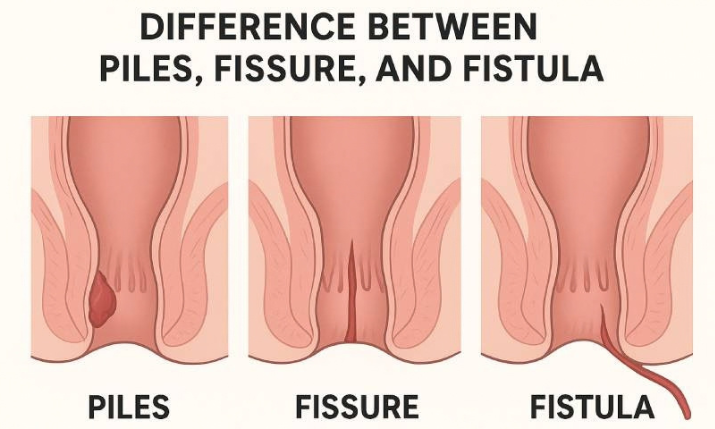
In simple terms, piles are swollen blood vessels, a fissure is a small tear in the anal lining, and a fistula is an abnormal tunnel that usually develops after an infection or abscess. However, symptoms can overlap, so a medical examination may be needed for an accurate diagnosis.
Dr. Prashant Kumar is a Laparoscopic and Robotic Surgeon in New Delhi, providing surgical care for proctology, hernia, gallbladder, and gastrointestinal conditions. Proper evaluation can help identify the cause of your symptoms and determine the appropriate treatment.
Piles vs Fissure vs Fistula: What Is the Difference?
The easiest way to understand these conditions is to look at what causes them.
| Condition | What is it? | Common symptoms |
|---|---|---|
| Piles | Swollen blood vessels in or around the anus | Bleeding, itching, lumps, discomfort |
| Anal fissure | A small tear in the anal lining | Sharp pain during or after bowel movements, bright red bleeding |
| Anal fistula | An abnormal tunnel between the anal canal and nearby skin | Persistent discharge, recurring swelling, pain, abscess |
These conditions may produce overlapping symptoms, particularly bleeding and pain. Therefore, symptoms alone cannot always confirm the diagnosis.
What Are Piles?
Piles, also called haemorrhoids, are swollen blood vessels inside or around the anus.
They can develop or become symptomatic due to increased pressure around the anal and rectal area. Constipation, straining during bowel movements, and spending a long time on the toilet can contribute to symptoms.
Common Symptoms of Piles
Typical symptoms may include:
- Bright red blood after passing stool
- Itching around the anus
- A lump around the anus
- Mucus on toilet paper or underwear
- A feeling that you still need to pass stool
- Discomfort or pain around the anus
Not every person with piles experiences the same symptoms. Some piles may cause bleeding without significant pain.
What Is an Anal Fissure?
An anal fissure is a small tear in the lining of the anus. It commonly develops after passing a hard or dry stool, although frequent loose stools and other forms of irritation can also contribute.
The most noticeable feature is often sharp pain during bowel movements.
Common Symptoms of an Anal Fissure
Symptoms can include:
- Sharp or severe pain while passing stool
- Burning pain that continues after a bowel movement
- Bright red blood on toilet paper or in the toilet
- Fear of passing stool because of pain
- Constipation or difficulty passing stool
Anal fissure pain may continue for minutes or even hours after passing stool.
What Is an Anal Fistula?
An anal fistula is an abnormal tunnel between the end of the bowel and the skin near the anus.
It commonly develops after an anal abscess, which is a collection of pus caused by an infection. After the abscess drains, a small tunnel may remain and develop into a fistula.
Common Symptoms of an Anal Fistula
Possible symptoms include:
- Persistent or throbbing pain
- Pus or foul-smelling discharge
- Blood-stained discharge
- A small opening near the anus
- Repeated swelling in the same area
- Recurrent abscesses
- Skin irritation
- Fever when an abscess or active infection is present
Unlike many mild cases of piles, an established anal fistula usually does not heal permanently without appropriate treatment. Surgery is often required.
Piles, Fissure or Fistula: Which One Causes Pain?
Pain can occur with all three conditions, but its pattern may provide a clue.
Piles: Pain may occur with swollen or thrombosed piles, while itching, bleeding, or a lump may also be present.
Fissure: Sharp pain during bowel movements followed by burning or continued pain afterwards is particularly common.
Fistula: Pain may be persistent or throbbing and can occur with swelling or discharge.
However, you should not rely on pain alone to identify the condition.
Which Condition Causes Bleeding?
Bright red rectal bleeding can occur with piles and anal fissures. A fistula can also cause blood-stained discharge.
This means that bleeding does not automatically mean you have piles.
Rectal bleeding can have several causes, and persistent or unexplained bleeding should be evaluated by a healthcare professional rather than automatically being attributed to haemorrhoids.
Which Condition Causes Pus or Discharge?
Persistent pus or foul-smelling discharge is more suggestive of an anal fistula or an associated abscess than simple piles or an uncomplicated fissure.
A small opening near the anus that repeatedly drains fluid is another reason to seek medical evaluation.
If discharge is accompanied by increasing pain, swelling, redness, or fever, prompt assessment is important because an abscess may require treatment.
Can Piles, Fissure or Fistula Be Treated Without Surgery?
Treatment depends on the diagnosis and severity.
Piles
Many mild cases of piles can improve with measures such as:
- Increasing dietary fibre
- Drinking enough fluids
- Avoiding excessive straining
- Keeping bowel movements regular
- Using medicines recommended by a healthcare professional
Persistent or more advanced piles may require procedures or surgery.
Anal Fissure
Many acute fissures improve with measures that keep stools soft and reduce irritation. Medical treatment may also be recommended when symptoms persist.
Chronic fissures may require additional treatment or a procedure depending on the individual case.
Anal Fistula
An established fistula usually requires a procedure because it does not normally heal permanently on its own.
Depending on the fistula’s location and relationship with the anal sphincter, treatment may include fistulotomy, seton placement, or another sphincter-preserving procedure.
When Should You See a Proctology Surgeon?
You should consider a medical evaluation if you have:
- Repeated rectal bleeding
- Severe or persistent anal pain
- A lump that keeps returning
- Pus or foul-smelling discharge
- Repeated swelling near the anus
- Symptoms that do not improve
- Fever with anal pain or swelling
- A wound or opening near the anus that does not heal
A doctor may examine the area and, when necessary, recommend further tests such as proctoscopy, ultrasound, or MRI. These investigations can be particularly useful when a fistula or complex anorectal condition is suspected.
Why Proper Diagnosis Matters
Piles, fissure, and fistula require different treatment approaches.
For example, increasing fibre and improving bowel habits may help many people with piles or fissures, but these measures alone will not normally eliminate an established fistula.
Similarly, assuming that every episode of rectal bleeding is caused by piles can delay the diagnosis of another condition. ASCRS notes that several anorectal conditions can be mistaken for haemorrhoids, which is why persistent or concerning symptoms should be properly evaluated.
Why Consult Dr. Prashant Kumar for Proctology Treatment in Delhi?
Dr. Prashant Kumar is a Laparoscopic and Robotic Surgeon in New Delhi, providing surgical care for proctology and gastrointestinal conditions.
Patients can seek consultation for symptoms related to piles, fissure, fistula, and other anorectal conditions.
During evaluation, the focus is on understanding the symptoms, examining the affected area, identifying the likely condition, and discussing appropriate treatment options.
The treatment plan depends on the diagnosis, severity, previous treatment, overall health, and individual clinical findings.
Frequently Asked Questions
1. How do I know if I have piles, fissure or fistula?
Sharp pain during and after bowel movements is commonly associated with an anal fissure. Piles may cause bright red bleeding, itching, or lumps. Persistent discharge, recurring swelling, or an opening near the anus may suggest a fistula. A medical examination is needed for an accurate diagnosis.
2. Which is more serious: piles, fissure or fistula?
These conditions are different and cannot be ranked simply by seriousness. A fistula or abscess may require surgical treatment, while many piles and fissures can initially be managed with non-surgical measures. The appropriate treatment depends on the individual diagnosis.
3. Can piles turn into a fistula?
Piles do not normally turn into fistulas. A fistula usually develops after an infection or abscess near the anus. Because symptoms can overlap, persistent discharge or recurring swelling should be evaluated rather than assumed to be piles.
4. Does an anal fissure heal on its own?
Many acute anal fissures improve with appropriate bowel habits and supportive treatment. However, fissures that persist or repeatedly return may require medical treatment or a procedure.
5. When should I see a doctor for anal pain or bleeding?
See a doctor if pain or bleeding persists, keeps returning, or is accompanied by swelling, discharge, fever, or other concerning symptoms. Severe anal pain with fever or significant bleeding requires prompt medical attention.
Suggested Links
https://www.drprashantsurgeon.com
https://www.drprashantsurgeon.com/contact-us
Book a Proctology Consultation in Delhi
Anal pain, bleeding, swelling, or discharge should not automatically be assumed to be piles. Piles, fissure, and fistula are different conditions and may require very different treatments.
If your symptoms are persistent, recurring, or affecting your daily life, a proper surgical evaluation can help identify the cause and guide the next step.
Dr. Prashant Kumar
Laparoscopic & Robotic Surgeon | Proctology, Hernia, Gallbladder & Gastrointestinal Surgery
Address: PSRI Hospital Institute, Press Enclave Marg, J Pocket, Phase II, Sheikh Sarai, New Delhi, Delhi 110017
Phone: +91 81787 85528
Book a consultation today to discuss your symptoms and understand the appropriate treatment options.