An anal abscess is a painful collection of pus that develops in or around the anus due to an infection. It may cause swelling, constant pain, tenderness, pus discharge, and fever. Although the symptoms can feel embarrassing, an anal abscess is a medical condition that should be assessed promptly.
Anal abscess treatment in Delhi often involves a procedure to drain the pus and control the infection. Antibiotics may be needed in certain situations, but they are not a substitute for drainage when an abscess requires a procedure.
Understanding the symptoms, treatment options, and recovery process can help you recognise warning signs and seek appropriate medical care.
What Is an Anal Abscess?
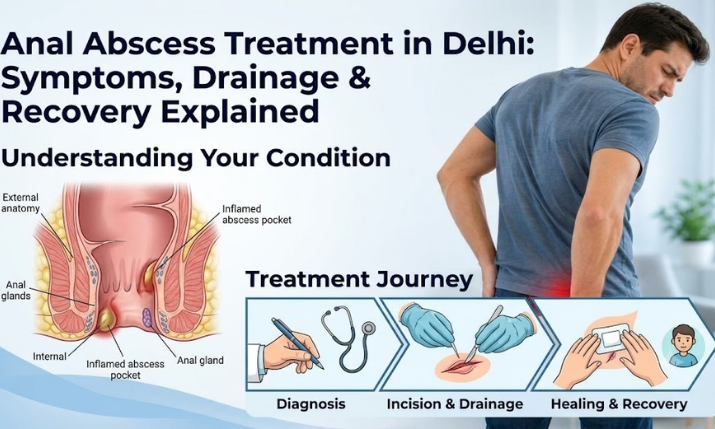
An anal abscess is a pocket of pus that forms near the anus or deeper in the surrounding tissues. It commonly develops when a small gland inside the anal canal becomes infected.
The abscess may form close to the skin or deeper around the rectum. Its location and size can affect the symptoms and treatment approach.
Some people may initially mistake an anal abscess for piles or a skin boil. However, an abscess is an infection that may worsen without appropriate treatment.
What Are the Common Symptoms of an Anal Abscess?
Symptoms vary depending on the depth and location of the infection. Common signs include:
- Constant anal pain: Pain may feel throbbing and become worse while sitting, walking, coughing, or passing stool.
- Swelling or a painful lump: The skin around the anus may feel swollen, tender, or warm.
- Redness and tenderness: The surrounding area may become sensitive to touch.
- Pus discharge: Yellowish or greenish fluid may leak if the abscess opens.
- Fever or chills: These can indicate that the infection is affecting the body.
- Feeling generally unwell: Some people experience tiredness or discomfort alongside local symptoms.
A deep abscess may cause significant pain without an obvious external lump.
When Should You Seek Urgent Medical Care?
Seek urgent medical assessment if you have severe or worsening anal pain, a painful swelling, fever, chills, or pus discharge. Do not wait for the abscess to burst on its own.
People with diabetes or a weakened immune system should be particularly careful about signs of infection. If you feel seriously unwell or develop rapidly worsening symptoms, seek emergency care.
What Causes an Anal Abscess?
The most common cause is infection of a small gland inside the anal canal. When bacteria enter the gland and multiply, pus can collect in the surrounding tissue.
Other factors or conditions may sometimes be involved, including:
- An existing anal fistula or previous abscess
- Crohn’s disease or another inflammatory bowel condition
- Certain infections or local tissue problems
- Diabetes or a weakened immune system, which may increase the risk of complications
An abscess can occur even in someone who is otherwise healthy. A doctor can assess possible contributing factors based on your symptoms and medical history.
How Is an Anal Abscess Diagnosed?
Diagnosis usually begins with a discussion of symptoms and a physical examination. The doctor may ask when the pain started, whether you have fever or discharge, and whether you have had similar problems before.
The examination may identify swelling, tenderness, or a visible collection of pus. If the abscess is deep, difficult to locate, or recurrent, further assessment or imaging may be recommended.
Not every patient needs a scan. The investigations depend on the suspected location, severity, and complexity of the infection.
What Is the Treatment for an Anal Abscess?
The right treatment depends on the abscess’s size, depth, location, and the patient’s general health.
1. Incision and Drainage
Incision and drainage is the main treatment for most anal abscesses that require a procedure. The surgeon makes an opening in the abscess so the pus can drain and the infected cavity can be cleaned.
The procedure is usually performed under anaesthesia to manage pain and allow the surgeon to work safely. The type of anaesthesia depends on the abscess and the individual patient.
In many cases, the wound is left open rather than stitched closed. This allows remaining fluid to drain and helps the area heal from the inside.
Some patients can go home the same day, while others may need hospital observation or additional treatment.
2. Are Antibiotics Enough to Treat an Anal Abscess?
Antibiotics may be prescribed when there is spreading infection, certain medical risk factors, or other clinical reasons. However, antibiotics alone are usually not enough for an established abscess that needs drainage.
Do not use leftover antibiotics or take medicines without medical advice. The surgeon will decide whether antibiotics are necessary alongside drainage.
3. What If an Anal Fistula Develops?
An anal fistula is an abnormal tunnel between the anal canal and the skin near the anus. It can develop after an abscess or remain after the abscess has drained.
Possible signs include repeated swelling, ongoing pus discharge, or an opening near the anus that does not heal.
If a fistula is suspected, further examination may be needed. Treatment depends on the fistula’s position and its relationship with the muscles that control bowel movements. Not every patient needs fistula surgery at the same time as abscess drainage.
How Long Does Recovery Take After Anal Abscess Drainage?
Recovery varies according to the size and depth of the abscess, the procedure performed, and the patient’s overall health. Pain and discomfort should generally begin to improve over the first few days, but the wound may take longer to heal completely.
Your surgeon will provide instructions based on your specific procedure.
How Can You Care for the Wound at Home?
Following the care instructions can support healing and help you recognise possible complications.
- Keep the area clean: Gently wash the area as directed, especially after passing stool.
- Use dressings as advised: Some drainage from an open wound may occur during healing. Follow your surgeon’s instructions about pads or dressings.
- Take prescribed medicines correctly: Follow the recommended doses and do not start or stop antibiotics without medical advice.
- Avoid constipation: Drink adequate fluids and follow any dietary or stool-softening advice given by your care team.
- Return to activities gradually: Your recovery and return to work depend on your comfort, wound healing, and the nature of your work.
- Attend follow-up appointments: Follow-up may be important if healing is delayed or a fistula is suspected.
Contact your treating team promptly if pain increases instead of improving, fever develops, swelling returns, or the wound appears increasingly infected.
Can an Anal Abscess Come Back?
Yes. An abscess can recur if the infection returns or if an underlying problem, such as an anal fistula, remains.
Repeated swelling or discharge from the same area should not be ignored. A surgeon may recommend another examination and, in selected cases, imaging to identify a deeper abscess or fistula.
There is no guaranteed way to prevent every recurrence, but appropriate drainage, wound care, and follow-up can help manage the condition.
Anal Abscess vs Piles: What Is the Difference?
Anal abscesses and piles can both cause discomfort around the anus, but they are different conditions.
- Anal abscess: Usually causes constant or throbbing pain, tender swelling, and sometimes fever or pus.
- Piles: May cause bleeding during bowel movements, itching, a lump, or discomfort. Fever and pus are not typical symptoms of uncomplicated piles.
Symptoms can overlap, so a medical examination is important. Do not assume that a painful lump is piles or try to squeeze or drain it at home.
Frequently Asked Questions
1. Is anal abscess treatment always surgical?
Many established anal abscesses require incision and drainage. The exact approach depends on the abscess’s location, size, and severity. A surgeon can determine whether a procedure is needed.
2. Can an anal abscess heal without drainage?
Some small or spontaneously draining infections may be managed differently after clinical assessment. However, an established abscess often needs drainage. Do not rely on home remedies or wait for it to burst without seeking medical advice.
3. Is anal abscess drainage painful?
The procedure is performed with appropriate anaesthesia to manage pain. Some discomfort can occur afterward, but prescribed pain relief and wound-care instructions can help during recovery.
4. How long does it take to recover after anal abscess drainage?
Recovery varies from person to person. Pain often starts improving over the first few days, while complete wound healing may take longer. The size and depth of the abscess, the presence of a fistula, and overall health can affect recovery time.
5. Can an anal abscess turn into an anal fistula?
Yes. An anal fistula can develop after an abscess, causing persistent or repeated discharge and swelling. If these symptoms continue after drainage, arrange a follow-up assessment.
Explore More from Dr. Prashant Kumar
https://www.drprashantsurgeon.com
https://www.drprashantsurgeon.com/contact-us
https://www.drprashantsurgeon.com/about-us
Book a Consultation for Anal Abscess Treatment in Delhi
Persistent anal pain, swelling, pus discharge, or fever may indicate an abscess that needs prompt medical assessment. Early evaluation can help determine whether drainage, medication, or further investigation is appropriate.
Contact Dr. Prashant Kumar to discuss your symptoms and available treatment options in Delhi. Do not delay urgent medical care if you have severe pain, fever, or rapidly worsening swelling.
Call +91 81787 85528 or visit drprashantsurgeon.com to enquire about an appointment.