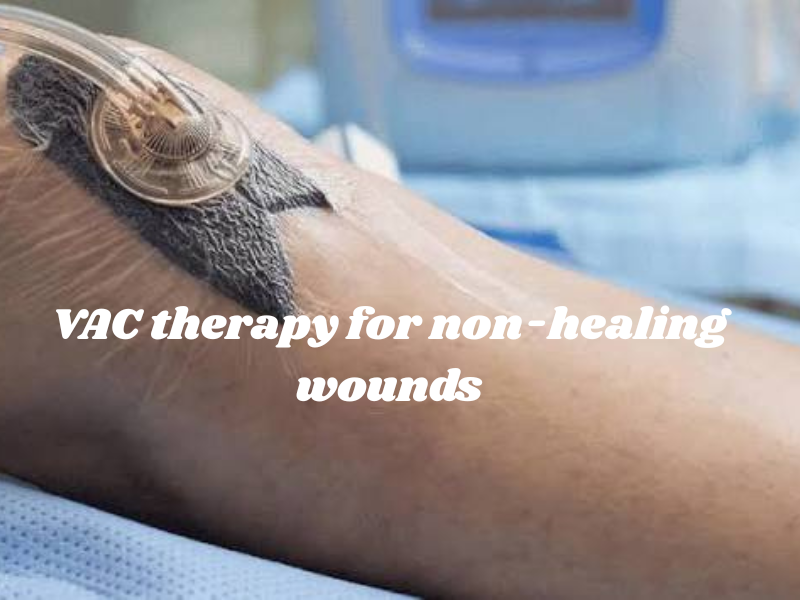
A wound that does not heal properly can become difficult to manage, especially when there is persistent fluid, infection, tissue damage or an underlying health condition affecting healing. In selected patients, VAC therapy, also known as negative pressure wound therapy (NPWT), may be used as part of a specialist wound-care plan.
VAC therapy uses a specially designed dressing connected to a pump. The system applies controlled negative pressure to the wound and helps remove excess wound fluid and other material from the wound area. It may support the wound-healing process when used appropriately and under medical supervision.
What Is VAC Therapy?
VAC stands for Vacuum-Assisted Closure. It is a form of negative pressure wound therapy used for selected wounds that require advanced wound management.
During treatment, a suitable dressing is placed over the wound and connected through tubing to a controlled suction pump. The system creates negative pressure over the wound surface.
Depending on the wound and treatment plan, VAC therapy may help:
- Remove excess wound fluid
- Manage wound drainage
- Maintain a controlled wound environment
- Support the development of healthy granulation tissue
- Help prepare some wounds for further treatment or closure
VAC therapy is not suitable for every wound. A surgeon or wound-care specialist needs to assess the wound before deciding whether negative pressure therapy is appropriate.
Which Wounds May Need VAC Therapy?
Non-healing wounds can develop for many different reasons. Some wounds may heal slowly because of infection, poor blood supply, diabetes, pressure, repeated tissue damage or problems following surgery.
Depending on the individual wound, negative pressure wound therapy may be considered for selected:
- Non-healing surgical wounds
- Complex wounds
- Wounds with significant drainage
- Some diabetic wounds
- Selected traumatic wounds
- Wounds following surgical procedures
- Wounds that require preparation before reconstruction or closure
The treatment decision depends on factors such as wound size, depth, tissue condition, infection, blood supply and the patient’s overall health.
NICE guidance notes that negative pressure therapy is used for a variety of wounds, but its role differs according to the wound type and clinical circumstances.
How Does VAC Therapy Work?
VAC therapy works by applying controlled negative pressure through a sealed dressing.
The dressing covers the wound and is connected to a pump through tubing. The pump creates suction, which helps draw excess fluid away from the wound into a collection container.
This process can help manage wound exudate and maintain a controlled environment around the wound.
The treatment does not simply mean placing a vacuum over a wound. Correct wound assessment, dressing selection, pressure settings, monitoring and regular clinical review are important parts of the treatment.
The exact treatment plan varies according to the patient’s wound and medical condition.
What Are the Potential Benefits of VAC Therapy?
For appropriately selected wounds, VAC therapy may provide several potential benefits.
1. Helps manage wound fluid
Excess fluid can make wound management more difficult. Negative pressure therapy can help remove wound exudate through the connected drainage system.
2. Supports the wound-healing environment
Controlled negative pressure may help create conditions that support the formation of healthy granulation tissue in selected wounds.
3. Helps manage complex wounds
Some wounds require more advanced wound-care techniques than conventional dressings alone. In such cases, negative pressure therapy may be considered as part of a broader treatment plan.
4. May help prepare a wound for further treatment
In selected cases, VAC therapy may be used temporarily to improve the wound bed before another procedure, reconstruction or wound closure.
However, these potential benefits should not be interpreted as a guarantee that VAC therapy will heal every non-healing wound. The response depends on the cause, severity and condition of the wound and the patient’s overall health.
Is VAC Therapy Suitable for Every Non-Healing Wound?
No.
This is one of the most important points patients should understand.
A non-healing wound needs to be evaluated before choosing a treatment. The underlying cause must also be addressed. For example, infection, poor circulation, pressure, diabetes or damaged tissue may require specific treatment alongside wound care.
Negative pressure wound therapy is therefore not a replacement for wound assessment, infection management, debridement, pressure relief or treatment of underlying medical conditions when those interventions are required.
NICE also highlights that wound type and patient characteristics vary considerably, making specialist assessment important when advanced negative-pressure therapies are considered.
What Happens During VAC Therapy?
The exact process varies according to the wound.
Generally, the wound is first assessed and cleaned. If necessary, unhealthy or dead tissue may require appropriate debridement.
A suitable wound dressing is then applied and sealed. Tubing connects the dressing to the negative pressure pump and collection system.
The pump applies controlled suction according to the prescribed treatment plan.
The wound and surrounding skin need to be monitored regularly. Dressings are changed at intervals decided by the treating healthcare team, depending on wound condition and the type of therapy being used.
VAC therapy may be temporary. Once the wound has improved sufficiently, the treatment plan may be changed to another form of wound care or the next stage of treatment.
How Long Does VAC Therapy Take?
There is no single treatment duration that applies to every patient.
The duration depends on:
- Wound size and depth
- Amount of wound drainage
- Presence or absence of infection
- Quality of the wound tissue
- Blood supply
- Underlying medical conditions
- Response to treatment
- Whether further surgery or wound closure is planned
The wound should be reviewed regularly so that treatment can be adjusted according to its progress.
What Conditions Can Affect Wound Healing?
A wound may take longer to heal when there are underlying factors affecting tissue repair.
These may include:
- Diabetes
- Poor circulation
- Infection
- Pressure on the wound
- Smoking
- Poor nutrition
- Certain chronic medical conditions
- Repeated trauma to the wound
- Significant tissue damage
Treating these factors is often an important part of wound management.
For example, simply applying negative pressure without addressing an underlying infection or poor blood supply may not provide an appropriate treatment strategy.
VAC Therapy in Delhi for Complex and Non-Healing Wounds
Dr. Prashant Kumar is a General, Laparoscopic and Robotic Surgeon in Delhi associated with PSRI Hospital. His surgical practice includes wound care and VAC therapy for selected patients requiring specialist management.
Patients with a wound that is not healing as expected may require a detailed evaluation to understand why the wound is not progressing normally.
Depending on the wound condition, the treatment plan may involve wound cleaning, debridement, infection management, advanced dressings, VAC therapy or other appropriate surgical care.
You can explore the Wound Care and VAC Therapy service on the website and learn more about Dr. Prashant Kumar’s surgical services.
Frequently Asked Questions About VAC Therapy
What is VAC therapy used for?
VAC therapy is a form of negative pressure wound therapy used for selected wounds that require advanced wound management. It can help remove excess wound fluid and support the wound environment in appropriately selected cases.
Is VAC therapy the same as negative pressure wound therapy?
VAC therapy is commonly used to describe vacuum-assisted closure, while negative pressure wound therapy is the broader medical term for treatment using controlled negative pressure over a wound.
Can VAC therapy treat a non-healing wound?
It may be useful for selected non-healing wounds, but it is not suitable for every wound. The underlying cause, wound condition and patient’s overall health need to be assessed first.
Is VAC therapy painful?
Some patients may experience discomfort during treatment or dressing changes. Pain management and dressing technique should be discussed with the treating healthcare team.
How often does a VAC dressing need to be changed?
The timing varies depending on the wound, the therapy being used and the treating team’s assessment. Dressing changes should be performed according to the prescribed wound-care plan.
Can VAC therapy be used for diabetic wounds?
Negative pressure therapy may be considered for selected diabetic wounds, but diabetes can affect healing and requires comprehensive wound assessment and management.
Does VAC therapy permanently close a wound?
VAC therapy is not a guaranteed wound-closure treatment. It may be used as part of a broader wound-management plan and, in selected cases, may help prepare a wound for further treatment or closure.
When should I see a surgeon for a non-healing wound?
If a wound is not healing, is repeatedly draining, becomes increasingly painful, develops redness or swelling, produces a foul-smelling discharge, or is associated with fever or other concerning symptoms, seek medical assessment promptly.
Consult a Wound Care and VAC Therapy Specialist in Delhi
A wound that does not heal should not be managed only by repeatedly changing dressings without identifying the underlying cause.
A proper surgical and wound assessment can help determine why the wound is not healing and whether advanced wound-care options such as VAC therapy may be appropriate.
If you or a family member has a complex or non-healing wound, consult Dr. Prashant Kumar at PSRI Hospital, New Delhi, for an evaluation and an individualized treatment plan.
Book a consultation to understand the cause of the wound, available treatment options and whether VAC therapy may be suitable for your condition.
