Robotic Surgery in Delhi: A Complete Guide
Robotic surgery in Delhi has moved from a futuristic concept to an everyday clinical reality. Patients now get access to world-class, minimally invasive procedures without travelling abroad. Hospitals across the capital operate advanced robotic platforms that assist surgeons in performing highly precise operations. These platforms cover urology, oncology, gynecology, cardiothoracic surgery, and more. If you or a loved one is considering a robot-assisted procedure, this guide walks you through exactly how the technology works, which conditions it treats best, and what the road to recovery looks like.
How Robotic Surgery Works
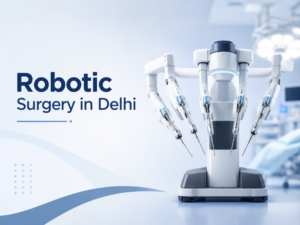
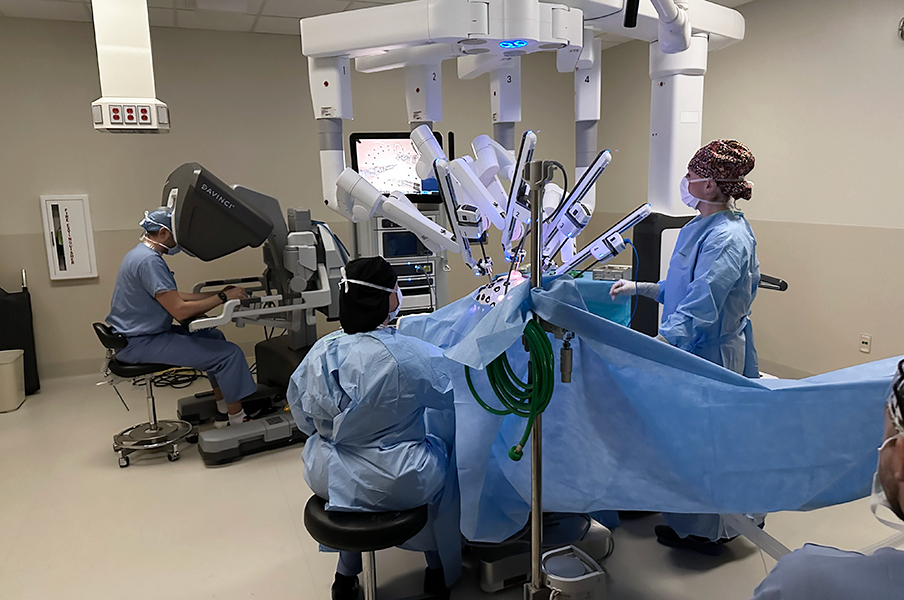
Despite the name, robotic surgery does not mean a robot operates independently. The system is a sophisticated extension of the surgeon’s hands. A trained specialist directs every movement in real time from a console a few metres from the operating table.
The most widely used platform in Delhi is the da Vinci Surgical System. However, newer systems such as the Versius and Hugo RAS are also entering Indian hospitals. Here is what happens during a typical robotic procedure:
- Patient positioning and port placement — The surgical team makes three to five small incisions (usually under 1 cm each) and inserts thin trocars to create a pathway for the robotic arms.
- Camera insertion — A high-definition, 3D-magnified endoscope passes through one port, giving the surgeon a detailed internal view on a stereoscopic display.
- Instrument docking — The team docks wristed instruments, capable of rotating 360°, to the robotic arms. These instruments have a far greater range of motion than the human wrist.
- Surgeon console operation — The surgeon manipulates hand controls and foot pedals at the console. Motion-scaling technology filters out natural hand tremors and translates large movements into micro-scale actions inside the body.
- Closure — Once the procedure is complete, the team withdraws the robotic arms, removes the ports, and closes the tiny incisions with sutures or surgical glue.
A bedside assistant surgeon is always present. This assistant handles specimen extraction, suturing support, and any emergency instrument changes.
Key Benefits of Robot-Assisted Procedures
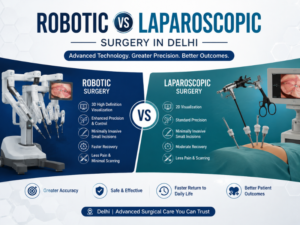
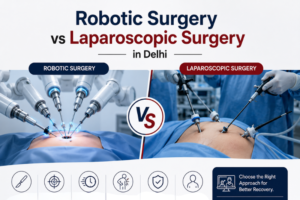
Patients and surgeons alike cite several consistent advantages. These advantages become clear when comparing robot-assisted approaches to open or conventional laparoscopic surgery.
Precision and Visualisation
The 10× to 15× magnified, 3D-HD view helps surgeons distinguish tissue planes, blood vessels, and nerve bundles. These structures are difficult to see with the naked eye or a standard laparoscope. This level of precision proves particularly valuable in nerve-sparing prostatectomy. There, preserving erectile function depends on millimetre-level accuracy.
Reduced Blood Loss and Transfusion Rates
The instruments are wristed and the view is magnified, so inadvertent vessel injury becomes less common. Studies consistently show lower intraoperative blood loss in robotic versus open surgery. As a result, patients need fewer blood transfusions.
Smaller Incisions and Less Scarring
Open surgery often requires a 15–25 cm incision. Robotic surgery, by contrast, relies on ports no wider than a pen. The resulting scars are minimal, and the aesthetic outcome is significantly better.
Faster Recovery and Shorter Hospital Stay
Patients undergoing robotic procedures typically spend one to three days in hospital. Equivalent open surgery, by comparison, requires five to seven days. Patients often return to normal activities — including desk work — within two to three weeks.
Lower Infection Risk
Smaller wounds mean fewer opportunities for external bacteria to enter the surgical site. Additionally, the closed nature of robotic procedures reduces exposure of internal organs to the environment.
Common Procedures Performed Using Robotic Surgery in Delhi
Delhi’s leading hospitals now offer robot-assisted surgery across a broad range of specialties. The table below outlines the most frequently performed procedures and the conditions they address.
Are You a Candidate for Robotic Surgery?
Not every patient or every condition is best served by a robotic approach. Your surgical team will evaluate several factors before recommending it:
- Body habitus — Robotic surgery generally works well across body types. However, very extensive adhesions from prior surgeries can sometimes limit instrument movement.
- Stage and extent of disease — Early-to-intermediate-stage cancers and benign conditions with defined anatomy are typically the best candidates.
- Overall health and anaesthetic fitness — Robotic surgery uses general anaesthesia and specific patient positioning, often steep Trendelenburg. Therefore, your team will assess your cardiac and respiratory fitness.
- Surgeon experience — Outcomes correlate strongly with surgeon volume. So, ask your specialist how many robotic cases of your specific procedure they have performed.
Conversely, surgeons may not prefer robotic surgery in a few situations. These include emergencies requiring rapid haemorrhage control, very advanced or extensively metastatic disease, or cases where a hospital lacks the necessary equipment and trained team.
What to Expect Before, During, and After Your Procedure
Before Surgery
Your pre-operative workup will mirror that of any major surgery. It typically includes blood tests, imaging (CT or MRI), an anaesthesia consultation, and sometimes a bowel preparation. You will need to fast for a minimum of six hours before the procedure. If you take blood thinners or anti-inflammatory medications, the team will advise you when to stop them.
During Surgery
The procedure itself lasts anywhere from one to four hours, depending on complexity. You will remain under general anaesthesia throughout and will have no awareness of the process.
After Surgery
Most robotic patients become mobile within hours of waking up. A physiotherapist will often visit you on the same day to begin gentle breathing exercises and assisted ambulation. This dramatically reduces the risk of blood clots. Oral intake usually resumes the same evening or the following morning, progressing from liquids to a light diet.
Expect some soreness around the port sites. You may also notice mild shoulder discomfort from residual carbon dioxide gas used to inflate the abdomen; this resolves within 48 hours. Typically, you’ll need prescription pain relief only for the first three to five days.
Follow-up appointments at one week, four weeks, and then as directed are standard. Doctors usually discuss pathology results, if relevant, at the first post-operative visit.
Frequently Asked Questions
Q: Is robotic surgery safer than conventional laparoscopic surgery? A: Both are considered safe in the hands of experienced surgeons. However, robotic systems offer additional precision — particularly for deep pelvic or thoracic work — due to their wristed instruments and superior visualisation. The right approach depends on the specific procedure and your surgeon’s expertise.
Q: How long does it take to fully recover from robotic surgery? A: Recovery varies by procedure. Many patients resume light activities within one to two weeks. Most return to full function within four to six weeks. Your surgeon may restrict physically demanding work or strenuous exercise for six to eight weeks, with guidance specific to your operation.
Q: Will I have visible scars after robotic surgery? A: You will have three to five small marks, typically 8–12 mm each. These fade considerably over six to twelve months and end up far less noticeable than open-surgery scars.
Q: Does every Delhi hospital with a robotic system offer all robotic procedures? A: No. Robotic programmes vary by hospital. Some centres specialise in urological robotics, while others focus on gynecology or oncology. So, it’s worth confirming that your chosen hospital and surgeon routinely perform your specific procedure robotically.
Q: Can robotic surgery be converted to open surgery mid-procedure? A: Yes, and this is a standard safety protocol. If the surgeon encounters unexpected bleeding, anatomical complexity, or technical difficulty, the team can convert the procedure to open surgery immediately. Conversion is not a complication; rather, it is a deliberate clinical decision made in your best interest.
Conclusion
Robotic surgery in Delhi represents a genuine advance in how complex procedures are delivered. It combines the safety of minimally invasive access with a level of surgical precision that open techniques rarely match. From prostate cancer surgery to gynecologic conditions and beyond, Delhi’s hospitals now offer a breadth of robotic options that rival any major international centre. If your specialist has recommended a robotic approach, understanding the technology, its benefits, and the recovery process puts you in the best position. You’ll be equipped to make an informed decision and prepare confidently for your procedure.
🌐 Visit our website: https://www.drprashantsurgeon.com/
📖 Explore more expert articles: https://www.drprashantsurgeon.com/blog/