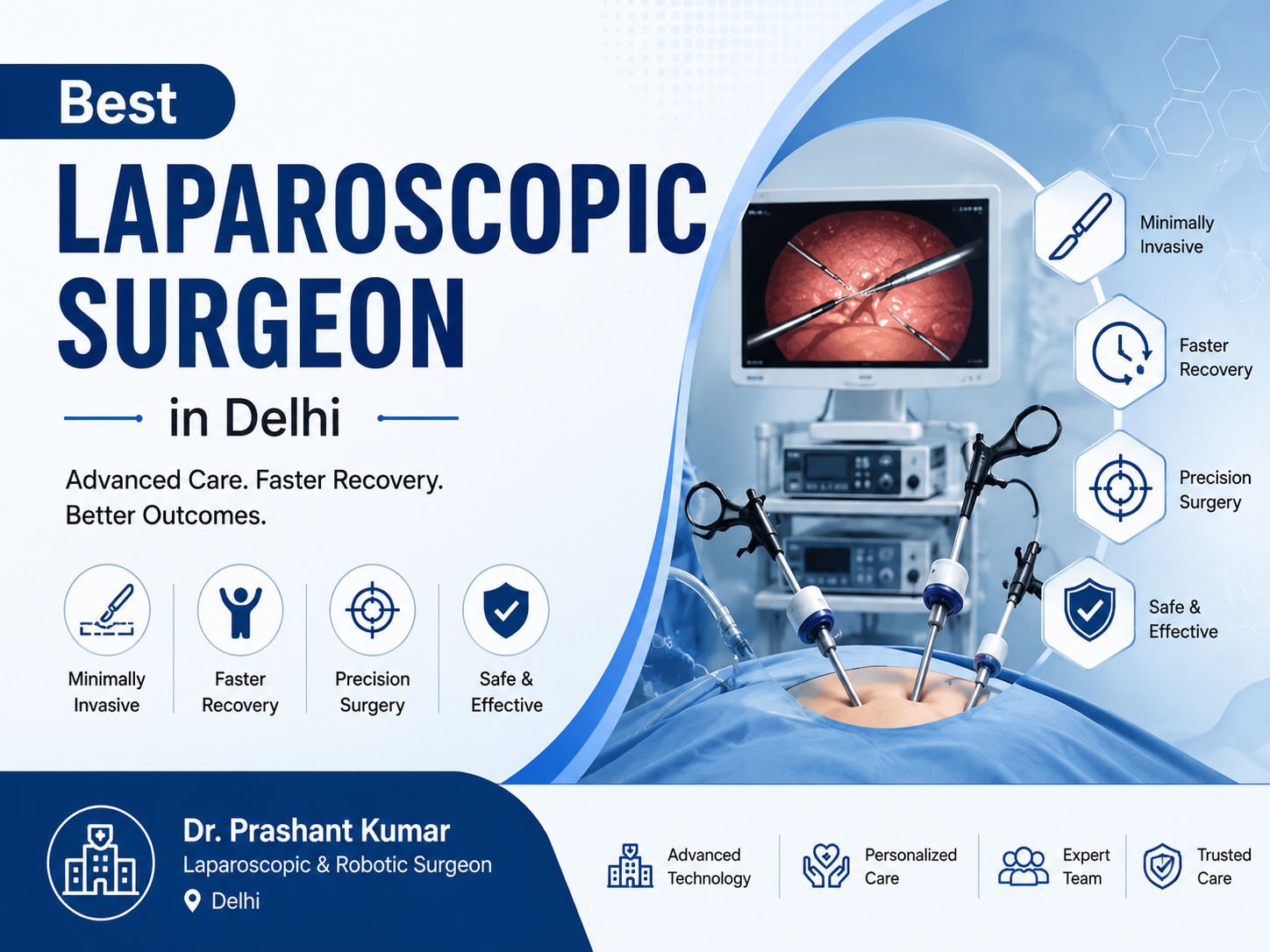
Choosing the best laparoscopic surgeon in Delhi is one of the most important healthcare decisions you will ever make. With dozens of hospitals and hundreds of surgeons practising across the city, the options can feel overwhelming — and the stakes are high. Laparoscopic surgery, while minimally invasive compared to open procedures, still demands exceptional precision, advanced training, and sound clinical judgment. The surgeon you select directly shapes your recovery time, complication risk, and long-term outcome. This guide walks you through ten evidence-based factors that distinguish a truly skilled laparoscopic surgeon from the rest.
1. Verify Formal Qualifications and Subspecialty Training
The foundation of any good surgeon is their academic and clinical training. For laparoscopic surgery in India, look for:
- MBBS + MS (General Surgery) from a recognised medical university
- Additional fellowship or diploma in Minimal Access Surgery (MAS) or Laparoscopic Surgery
- Training at accredited institutions such as AIIMS, ILBS, or internationally recognised centres
A surgeon who has completed dedicated fellowship training in laparoscopy has spent thousands of additional hours on simulators and in operating theatres beyond their basic surgical degree. This hands-on subspecialty experience is not optional — it is essential.
2. How the Best Laparoscopic Surgeon Builds Procedure-Specific Experience
Not all laparoscopic procedures are equal in complexity. A surgeon who performs high volumes of a specific procedure — such as laparoscopic cholecystectomy, hernia repair, appendectomy, or bariatric surgery — develops a level of muscle memory and pattern recognition that lower-volume surgeons simply cannot match.
Ask directly:
- How many of this specific procedure have you performed?
- What is your personal conversion rate (cases converted from laparoscopic to open surgery)?
- What is your complication rate for this procedure?
A confident, experienced surgeon will answer these questions without hesitation.
3. Check Hospital Accreditation and Surgical Infrastructure
Even the best surgeon needs the right environment. The hospital or surgical centre matters enormously. Prioritise facilities that hold:
- NABH (National Accreditation Board for Hospitals) accreditation — India’s gold standard for hospital quality
- JCI accreditation for internationally benchmarked safety protocols
- Modern laparoscopic towers with HD or 4K camera systems
- Dedicated laparoscopic operation theatres with trained scrub nurses and anaesthesiologists
A surgeon operating in a well-equipped, accredited facility is far better positioned to handle intraoperative surprises than one working with outdated equipment.
4. Evaluate the Surgeon’s Reputation and Patient Feedback
Word of mouth remains one of the most reliable signals in healthcare. Go beyond star ratings and read detailed patient reviews on platforms such as Google, Practo, and Lybrate. Pay attention to:
- Comments about the surgeon’s communication style and patience during consultations
- Reports of post-operative follow-up quality
- Experiences with complications and how the team responded
- Whether patients felt genuinely informed before consenting to surgery
A surgeon with consistently positive feedback across multiple platforms — not just volume of reviews — signals a trustworthy practice.
5. Prioritise Communication and Informed Consent
The consultation itself is a test. A skilled and ethical surgeon will:
- Explain your diagnosis in plain language
- Walk you through the procedure step by step
- Discuss realistic risks, benefits, and alternatives
- Never rush you into a decision
- Encourage you to ask questions
If a surgeon dismisses your questions, seems impatient, or pressures you into scheduling surgery immediately, treat that as a warning sign. Informed consent is not just a legal formality — it reflects the surgeon’s respect for your autonomy as a patient.
6. Confirm Membership in Professional Surgical Bodies
Active membership and participation in professional organisations is a strong indicator of a surgeon’s commitment to continuing education and ethical practice. Look for membership in:
- Association of Surgeons of India (ASI)
- Society of Endoscopic & Laparoscopic Surgeons of India (SELSI)
- Indian Association of Gastrointestinal Endo Surgeons (IAGES)
- International bodies such as the Society of American Gastrointestinal and Endoscopic Surgeons (SAGES)
Membership means the surgeon is held to a professional code of conduct and regularly updates their skills through conferences, workshops, and peer review.
7. Understand the Multidisciplinary Team Behind the Surgeon
Laparoscopic surgery is never a solo act. Outstanding outcomes depend on the entire perioperative team:
- Anaesthesiologists experienced in laparoscopic cases (pneumoperitoneum alters physiology)
- Scrub nurses and surgical technicians familiar with laparoscopic instrument sets
- Intensivists available for post-operative monitoring when needed
- Physiotherapists for early mobilisation protocols
When you consult a surgeon, ask who else will be involved in your care. A surgeon who speaks confidently about their team is one who understands that patient safety is a collective responsibility.
8. Look at Research Activity and Teaching Involvement
Surgeons who teach residents, publish research, or present at national conferences are typically operating at the cutting edge of their field. Academic engagement forces rigorous self-evaluation and keeps surgical practice evidence-based.
This does not mean you should avoid non-academic surgeons — many excellent practitioners work entirely in private settings. But a surgeon with a track record of publications or CME (Continuing Medical Education) activity demonstrates intellectual seriousness about their specialty.
9. Trust Your Instincts After the Consultation
After all the objective criteria are assessed, your gut feeling during the consultation matters. Ask yourself:
- Did the surgeon make eye contact and listen actively?
- Did I leave the appointment feeling more informed, not more confused?
- Was the team courteous, organised, and transparent?
- Did anything about the interaction feel rushed or dismissive?
You are entrusting this person with your body under anaesthesia. If something felt off, it is entirely appropriate to seek a second opinion. The best surgeons in Delhi will respect that decision and will not take it personally.
10. Consider Post-Operative Care and Follow-Up Support
Successful laparoscopic surgery does not end when you leave the operating room. Proper post-operative care plays a major role in ensuring a smooth recovery and reducing the risk of complications.
Before choosing a surgeon, ask about the follow-up process:
- How many follow-up visits are included after surgery?
- Who should you contact in case of pain, fever, or unexpected symptoms?
- Will you receive clear recovery instructions regarding diet, medications, wound care, and physical activity?
- How quickly can you reach the surgical team if you have concerns after discharge?
A surgeon who provides structured post-operative care demonstrates a commitment to your long-term recovery rather than focusing only on the procedure itself. Clear communication, timely follow-up, and ongoing support can make your recovery safer, more comfortable, and more confident.
Frequently Asked Questions
What is the difference between a general surgeon and a laparoscopic surgeon in Delhi?
A general surgeon is trained to perform a broad range of abdominal and soft-tissue procedures using both open and minimally invasive techniques. A laparoscopic surgeon has pursued additional fellowship training specifically in keyhole surgery and typically performs a higher volume of minimally invasive cases. In Delhi, many experienced general surgeons also hold laparoscopic subspecialty credentials.
How many laparoscopic surgeries should a surgeon have performed before I feel confident?
For common procedures like cholecystectomy, a surgeon who has independently performed over 200 cases is generally considered experienced. For complex procedures such as laparoscopic colorectal surgery or bariatric surgery, look for surgeons who have performed at least 100–150 independent cases of that specific operation.
Is laparoscopic surgery safer than open surgery for all conditions?
For many conditions — gallstones, hernias, appendicitis, GERD, and certain gynaecological problems — laparoscopic surgery offers equivalent or superior safety profiles compared to open surgery, with faster recovery and lower wound-infection rates. However, the approach depends on individual patient factors, and some situations still require open surgery. Your surgeon should explain which approach is most appropriate for your specific case.
Can I ask a surgeon for a second opinion without offending them?
Absolutely. Seeking a second opinion before any elective surgical procedure is not only your right — it is good medical practice. Reputable surgeons encourage it. If a surgeon reacts negatively to this request, that response itself is valuable information about their professional temperament.
What red flags should I watch for when choosing a laparoscopic surgeon?
Watch for surgeons who cannot clearly articulate their complication rates, who seem dismissive of your questions, who operate in facilities lacking NABH accreditation, or who recommend surgery without thoroughly exhausting non-surgical options first. Transparency and patience during the pre-operative consultation are among the clearest markers of a trustworthy surgeon.
Conclusion
Finding the best laparoscopic surgeon in Delhi is not about choosing the most prominent name or the most advertised hospital. It is about systematically evaluating qualifications, procedural experience, institutional quality, communication skills, and professional standing. The ten factors outlined above give you a practical, patient-centred framework to make an informed and confident decision. Take your time, ask hard questions, and remember that the right surgeon will welcome your diligence — because it reflects exactly the kind of engaged, informed patient they want to serve.
🌐 Visit our website:
https://www.drprashantsurgeon.com/
📖 Explore more expert articles:
https://www.drprashantsurgeon.com/