Gallbladder Stone Surgery in Delhi
Gallbladder stones are a common health problem, but many people do not know they have them until they start feeling pain. Some stones may not cause symptoms for a long time, while others can lead to repeated pain and other health problems if they are ignored.
If you have been diagnosed with gallbladder stones or often experience pain after eating, it is important to understand when you should seek medical advice.
In this guide, Dr. Prashant Kumar, an experienced General, Laparoscopic & Robotic Surgeon in Delhi, explains what can happen if gallbladder stones are left untreated and when you should consult a doctor.
What Are Gallbladder Stones?
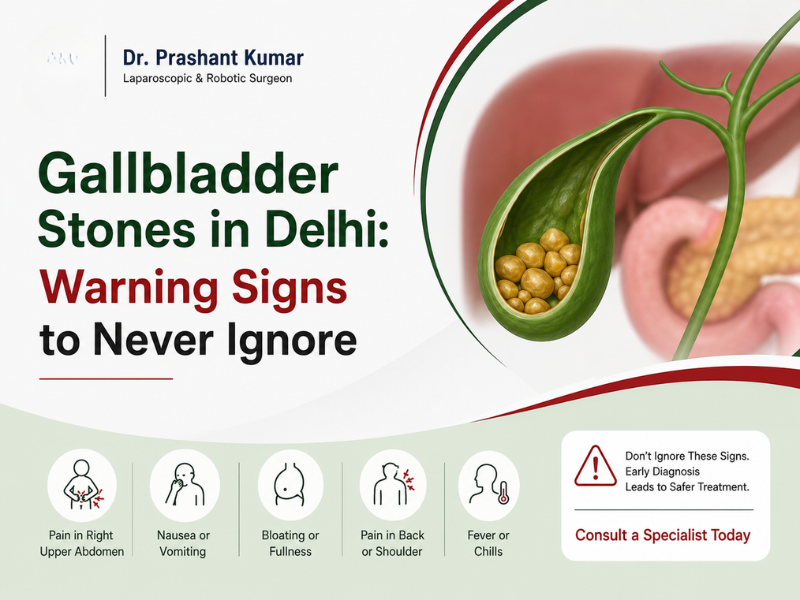
The gallbladder is a small organ that stores bile, a digestive fluid made by the liver. Sometimes, hard deposits called gallbladder stones can form inside it.
Some people never notice them, while others may develop symptoms that affect their daily life.
Common Symptoms of Gallbladder Stones
You may notice:
- Pain in the upper right side of the abdomen
- Pain after eating oily or heavy meals
- Pain that spreads to the back or right shoulder
- Nausea or vomiting
- Bloating after meals
- Indigestion
- Frequent stomach discomfort
If these symptoms occur repeatedly, they should not be ignored.
What Happens If Gallbladder Stones Are Left Untreated?
Not every gallbladder stone causes immediate problems, but ignoring symptoms may lead to more discomfort over time.
Possible problems include:
1. Repeated Pain Attacks
Pain may come and go in the beginning, but it often becomes more frequent if the stones continue to block the flow of bile.
2. Difficulty Enjoying Meals
Many patients begin avoiding oily or spicy foods because eating triggers pain or discomfort.
Over time, this can affect everyday life.
3. Swelling of the Gallbladder
If a stone blocks the normal flow of bile, the gallbladder may become swollen and painful.
This usually requires prompt medical attention.
4. Infection
In some cases, blockage caused by gallstones may lead to infection.
Symptoms may include:
- Fever
- Chills
- Severe abdominal pain
- Feeling unwell
These symptoms should never be ignored.
5. Problems With Digestion
Some people experience ongoing bloating, nausea, or discomfort after meals when gallbladder stones continue to cause irritation.
6. Emergency Situations
If severe pain is combined with fever, vomiting, or yellowing of the skin or eyes, immediate medical evaluation is important.
Can Gallbladder Stones Go Away on Their Own?
Most gallbladder stones do not disappear naturally.
If the stones are causing repeated symptoms, your doctor may recommend treatment based on your overall condition.
Early consultation helps prevent unnecessary discomfort and supports timely care.
When Should You Visit a Surgeon?
Consult a General Surgeon in Delhi if you have:
- Repeated pain after meals
- Pain in the upper right abdomen
- Frequent nausea
- Vomiting with abdominal pain
- Fever along with stomach pain
- Yellowing of the skin or eyes
- Gallstones diagnosed on an ultrasound
Early evaluation can help determine the most suitable treatment.
How Are Gallbladder Stones Diagnosed?
A doctor may recommend:
- Discussion of your symptoms
- Physical examination
- Ultrasound scan
- Blood tests if required
These tests help confirm the diagnosis and guide treatment.
Treatment for Gallbladder Stones
Treatment depends on your symptoms and overall health.
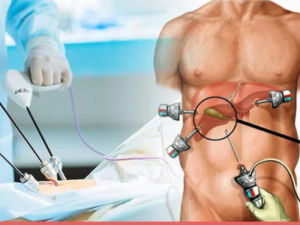
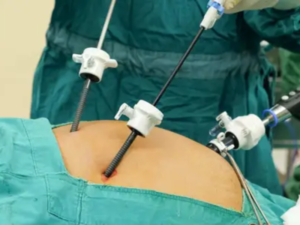
If gallbladder stones are causing repeated pain or complications, your surgeon may recommend laparoscopic gallbladder surgery, a minimally invasive procedure performed through small cuts.
Your doctor will explain the most suitable treatment after evaluating your condition.
Why Early Treatment Matters
Seeking treatment at the right time may help:
- Prevent repeated pain
- Reduce discomfort after meals
- Lower the chance of complications
- Support faster recovery
- Improve quality of life
Why Choose Dr. Prashant Kumar?
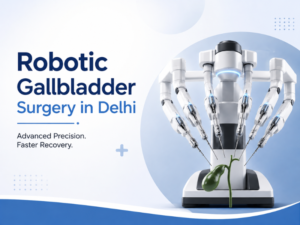
Dr. Prashant Kumar is an experienced General, Laparoscopic & Robotic Surgeon in Delhi with more than 16 years of experience in advanced surgical care.
Patients choose Dr. Prashant Kumar because of:
- Patient-friendly consultations
- Clear treatment guidance
- Advanced minimally invasive surgical care
- Personalized treatment planning
- Complete support before and after treatment
Frequently Asked Questions
1. Can gallbladder stones go away without treatment?
Most gallbladder stones do not disappear on their own. If they cause symptoms, medical evaluation is recommended.
2. Is every gallbladder stone dangerous?
No. Some stones do not cause symptoms, but stones causing repeated pain or other problems should be evaluated by a surgeon.
3. What foods can trigger gallbladder pain?
Many people notice pain after eating oily, fried, or heavy meals.
4. When should I see a doctor for gallbladder stones?
You should seek medical advice if you have repeated abdominal pain, nausea, vomiting, fever, or pain after meals.
5. Can gallbladder stones come back after treatment?
Your surgeon will explain what to expect based on the treatment recommended for your condition.
6. Who performs gallbladder stone surgery?
An experienced General and Laparoscopic Surgeon performs gallbladder surgery after evaluating your symptoms and reports.
7. Is laparoscopic surgery commonly used for gallbladder stones?
Yes. Many patients with gallbladder stones are treated using laparoscopic surgery, depending on their condition.
Book Your Consultation
If you have frequent pain after eating, repeated stomach discomfort, or have been diagnosed with gallbladder stones, do not ignore your symptoms.
Consult Dr. Prashant Kumar, an experienced General, Laparoscopic & Robotic Surgeon in Delhi, for a detailed evaluation and personalized treatment guidance.
Clinic Address
Press Enclave Marg, J Pocket, Phase II, Sheikh Sarai,
New Delhi, Delhi 110017
Follow Dr. Prashant Kumar for trusted health information and patient education:
Instagram: https://www.instagram.com/_drprashantkumar_/
YouTube: https://www.youtube.com/@drprashant
Book your consultation today and take the first step toward better digestive health.