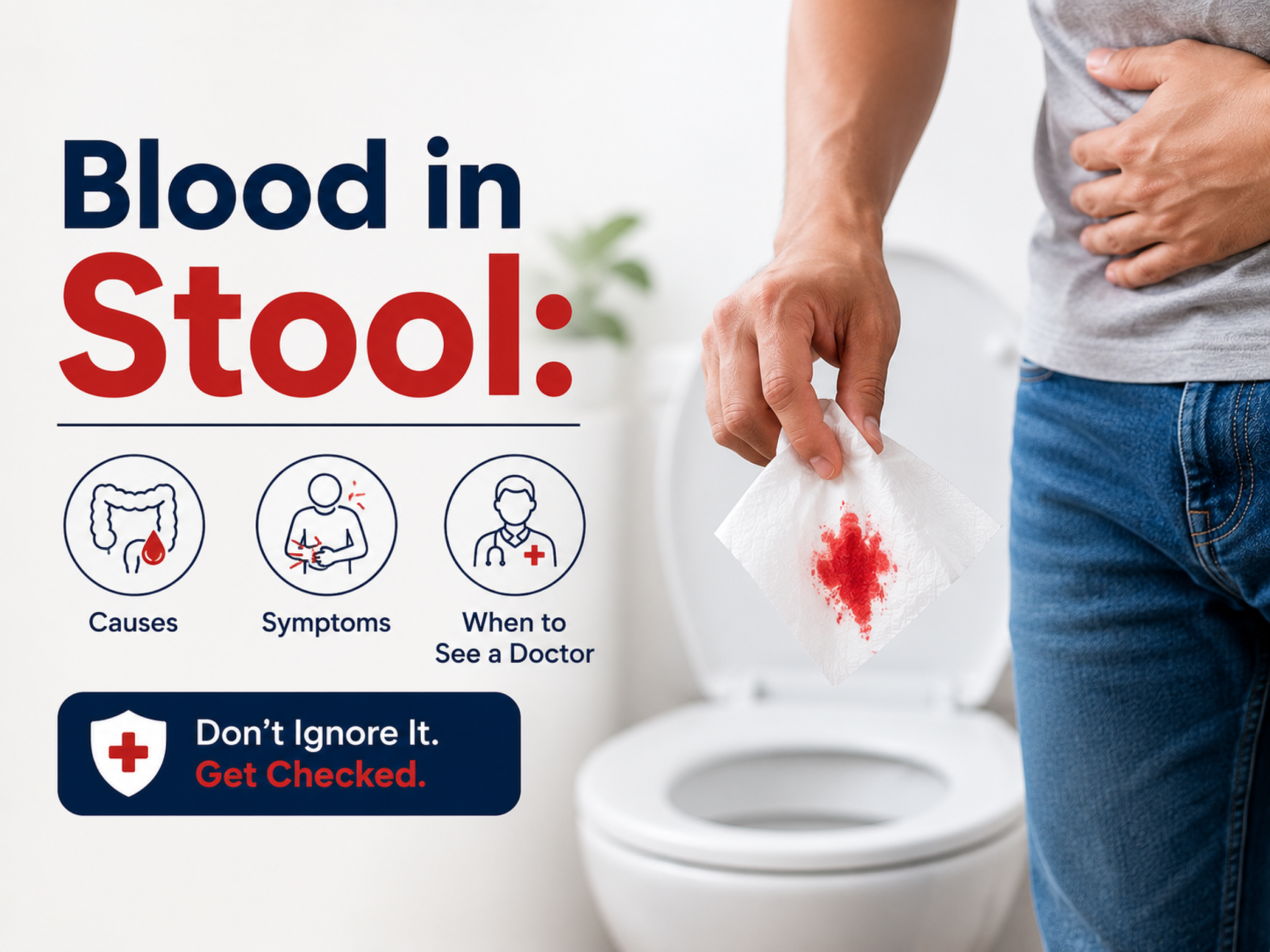
Blood in Stool: Should You Be Worried?
Seeing blood in your stool can be frightening. Many people immediately think it is piles and delay visiting a doctor. While piles are a common reason for bleeding during or after passing stool, they are not the only cause.
In some cases, blood in stool may be linked to other conditions that need timely medical attention. Ignoring repeated bleeding can delay diagnosis and treatment.
If you notice blood in your stool more than once or have other symptoms such as pain, changes in bowel habits, or unexplained weight loss, it is important to consult an experienced doctor.
Dr. Prashant Kumar, an experienced General, Laparoscopic, and Robotic Surgeon in New Delhi, provides expert evaluation and treatment for piles and other conditions affecting the digestive system.
Learn more about available treatments:
https://drprashantsurgeon.com/
What Does Blood in Stool Look Like?
Blood in stool does not always look the same.
You may notice:
- Bright red blood on the toilet paper
- Blood on the surface of the stool
- Blood in the toilet bowl
- Dark or black-colored stool
- Blood mixed with stool
Any type of bleeding should be evaluated if it happens repeatedly or is accompanied by other symptoms.
Is Blood in Stool Always Caused by Piles?
No.
Although piles are one of the most common causes, blood in stool can occur due to several different conditions.
Finding the exact cause is important because the treatment depends on the reason behind the bleeding.
Common Causes of Blood in Stool
1. Piles
Piles are swollen veins around the lower part of the bowel. They are one of the leading causes of bright red bleeding during bowel movements.
Common signs include:
- Bright red blood after passing stool
- Pain or discomfort while passing stool
- Itching around the anus
- A small lump near the anus
- Swelling or irritation
Early treatment can help relieve symptoms and prevent the condition from getting worse.
2. Small Tear Around the Anus
A small tear in the skin around the anus can also cause bleeding.
People with this condition often experience:
- Sharp pain while passing stool
- Burning sensation
- Bright red blood on toilet paper
- Pain that continues for some time after bowel movements
Constipation is a common reason for this problem.
3. Long-Term Constipation
Passing hard stools repeatedly can cause irritation and bleeding.
Other symptoms may include:
- Straining during bowel movements
- Stomach discomfort
- Bloating
- Feeling that the bowel has not emptied completely
Improving bowel habits is often an important part of treatment.
4. Growths Inside the Bowel
Sometimes, blood in stool may be caused by abnormal growths inside the bowel.
These may not cause pain in the early stages, making regular medical evaluation important if bleeding continues.
Warning signs may include:
- Blood mixed with stool
- Change in bowel habits
- Unexplained weight loss
- Ongoing tiredness
- Frequent bleeding
5. Infections or Inflammation
Certain infections or irritation inside the bowel may also lead to blood in stool.
This may be associated with:
- Loose stools
- Stomach pain
- Fever
- Frequent bowel movements
Prompt medical advice is recommended if these symptoms occur.
When Should You See a Doctor Immediately?
Do not ignore blood in stool if you notice:
- Bleeding that keeps coming back
- Large amounts of blood
- Severe pain
- Black-colored stool
- Weight loss without trying
- Fever along with bleeding
- Persistent constipation
- A lump near the anus
- Weakness or dizziness
Early diagnosis can help identify the cause before complications develop.
How Is the Cause Diagnosed?
Your doctor will first ask about your symptoms and medical history before performing a careful examination.
If required, additional tests may be recommended to find the exact reason for the bleeding.
Identifying the correct cause helps ensure the most appropriate treatment.
Can Blood in Stool Be Prevented?
Although not every cause can be prevented, healthy habits can reduce the risk of common bowel problems.
Simple lifestyle tips include:
- Drink plenty of water every day.
- Eat foods rich in fibre.
- Avoid long-term constipation.
- Stay physically active.
- Avoid delaying bowel movements.
- Maintain a healthy body weight.
- Seek medical advice if bleeding occurs more than once.
Treatment Depends on the Cause
Treatment is different for every patient.
Some people improve with lifestyle changes and medicines, while others may require a planned procedure to treat the underlying condition.
The most important step is finding the correct cause rather than assuming it is only piles.
Early treatment usually leads to better outcomes.
Why Choose Dr. Prashant Kumar?
Dr. Prashant Kumar is an experienced General, Laparoscopic, and Robotic Surgeon in New Delhi with expertise in treating piles, hernia, gallbladder problems, appendix conditions, and other abdominal disorders.
He believes in identifying the root cause of every problem before recommending treatment and provides patient-focused care using modern surgical techniques when needed.
If you are experiencing blood in stool or repeated bowel-related symptoms, timely consultation can help prevent complications.
Visit:
https://drprashantsurgeon.com/
Book your appointment:
https://www.drprashantsurgeon.com/contact-us
Frequently Asked Questions (FAQs)
Is blood in stool always a sign of piles?
No. While piles are a common cause, blood in stool may also occur due to constipation, small tears around the anus, infections, or other bowel conditions. A proper medical evaluation is important.
Should I ignore blood in stool if it happens only once?
A single episode may not always be serious, but if bleeding happens again or is associated with pain or other symptoms, consult a doctor.
What colour of blood is usually seen in piles?
Piles commonly cause bright red blood during or after passing stool.
Can constipation cause blood in stool?
Yes. Passing hard stools can cause small tears or worsen piles, leading to bleeding.
When should I seek emergency medical care?
Seek immediate medical attention if you have heavy bleeding, black-colored stool, severe pain, dizziness, weakness, or repeated bleeding.
Which doctor should I consult for blood in stool?
If you notice blood in your stool, consult an experienced General and Laparoscopic Surgeon such as Dr. Prashant Kumar in New Delhi for proper diagnosis and treatment.
Conclusion
Blood in stool should never be ignored or assumed to be piles without proper evaluation. While many cases are caused by common conditions, some may require timely medical care.
Early diagnosis helps identify the exact cause and allows appropriate treatment before the condition becomes more serious.
If you have noticed blood in your stool, recurring bleeding, or changes in your bowel habits, schedule a consultation with Dr. Prashant Kumar, an experienced General, Laparoscopic, and Robotic Surgeon in New Delhi.
For more information, visit:
https://drprashantsurgeon.com/
To book an appointment, visit:
https://www.drprashantsurgeon.com/contact-us