Have You Noticed a Lump in Your Abdomen?
Finding a lump in your abdomen can be worrying. Some people notice it while standing, lifting heavy objects, coughing, or exercising. Others may only feel it when they touch the area.
While not every lump is serious, one of the most common reasons is a hernia. Many people ignore it because the lump may disappear when they lie down or it may not cause pain in the beginning.
Ignoring a hernia can allow it to become larger and more uncomfortable over time. Getting it checked early can help prevent complications and allow timely treatment.
If you have noticed a lump in your abdomen, this guide will help you understand the possible signs of a hernia and when you should see a doctor.
Learn more about hernia treatment and other surgical services at:
What Is a Hernia?
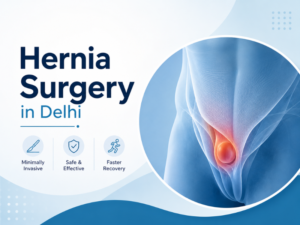
A hernia happens when a part inside the abdomen pushes through a weak area in the muscles. This creates a lump or swelling that may become more noticeable during daily activities.
A hernia does not usually go away on its own. In many cases, it slowly becomes larger over time.
How Can You Tell If the Lump Is a Hernia?
A hernia often has some common signs.
You may notice:
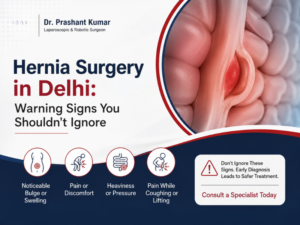
- A soft lump or swelling in the abdomen or groin
- The lump becomes bigger while standing
- The swelling appears after lifting heavy objects
- The lump becomes more noticeable while coughing
- It may disappear when lying down
- Mild discomfort or heaviness in the affected area
- Pain after physical activity
Some people have only a visible lump without pain, while others experience increasing discomfort during everyday activities.
Common Symptoms of a Hernia
Every patient may experience different symptoms.
Common signs include:
- A visible lump
- Pain while bending
- Discomfort after walking
- Pulling sensation in the abdomen
- Swelling that increases during the day
- Pain after lifting heavy items
- Feeling of pressure in the abdomen
- Discomfort during coughing or sneezing
These symptoms should not be ignored, even if they seem mild.
What Causes a Hernia?
Several factors can increase the chance of developing a hernia.
These include:
- Heavy lifting
- Frequent coughing
- Being overweight
- Long-term constipation
- Weak abdominal muscles
- Previous surgery on the abdomen
- Regular physical strain
- Growing older
Sometimes a hernia develops slowly over several months, while in other cases it appears after sudden physical effort.
When Should You See a Doctor?
Many people wait until the pain becomes severe before seeking treatment.
However, it is better to consult a doctor if you notice:
- A lump that keeps getting bigger
- Pain during daily activities
- Swelling that does not disappear
- Difficulty standing for long periods
- Pain while coughing
- Pain while lifting objects
- Increasing discomfort every week
Early evaluation can help identify the problem before it becomes more serious.
Warning Signs That Need Immediate Medical Attention
Seek urgent medical care if:
- The lump suddenly becomes very painful.
- The swelling becomes hard.
- The lump cannot be pushed back.
- You have severe stomach pain.
- You experience repeated vomiting.
- The swelling changes colour.
- You develop fever along with severe pain.
These symptoms should never be ignored.
Can a Hernia Heal Without Treatment?
This is one of the most common questions patients ask.
A hernia usually does not heal by itself.
While the lump may become smaller when lying down or resting, the weakness remains. Over time, the swelling may become larger and symptoms may become more noticeable.
Getting medical advice early helps you understand the best treatment for your condition.
How Is a Hernia Diagnosed?
In many cases, a doctor can identify a hernia by discussing your symptoms and performing a physical examination.
If needed, additional tests may be recommended to understand the condition more clearly and plan the most appropriate treatment.
Early diagnosis often makes treatment easier and recovery smoother.
Can You Prevent a Hernia?
Although every hernia cannot be prevented, healthy habits may lower the risk.
Simple steps include:
- Lift heavy objects carefully.
- Avoid unnecessary strain.
- Stay physically active.
- Maintain a healthy weight.
- Eat a fibre-rich diet.
- Drink enough water.
- Avoid long-term constipation.
- Seek treatment for persistent coughing.
These habits also support better overall digestive and abdominal health.
Why Early Treatment Matters
Many people continue their normal routine even after noticing a lump because the pain is mild.
However, delaying treatment may allow the hernia to grow larger, making everyday activities more uncomfortable.
Early consultation helps you understand your condition and choose the most suitable treatment before complications develop.
Why Choose Dr. Prashant Kumar?
Dr. Prashant Kumar is an experienced General, Laparoscopic, and Robotic Surgeon in New Delhi with expertise in treating hernia and other abdominal conditions.
He focuses on patient-friendly care, clear communication, and modern treatment options that help patients return to their daily routine as comfortably as possible.
If you have noticed a lump in your abdomen or groin, do not ignore it.
Visit:
Book your consultation here:
https://www.drprashantsurgeon.com/contact-us
Frequently Asked Questions (FAQs)
Is every lump in the abdomen a hernia?
No. A lump in the abdomen can have different causes. A doctor can determine whether it is a hernia or another condition.
Does a hernia always cause pain?
No. Many hernias begin as a painless lump. Pain or discomfort may develop as the condition progresses.
Can a hernia disappear on its own?
The lump may become less noticeable when lying down, but a hernia usually does not heal without treatment.
Is it safe to ignore a small hernia?
Even a small hernia should be checked by a doctor because it may grow larger over time.
What activities can make a hernia worse?
Heavy lifting, frequent coughing, straining during bowel movements, and intense physical activity may increase discomfort.
Which doctor should I consult for a hernia?
If you notice a lump in your abdomen or groin, consult an experienced General and Laparoscopic Surgeon such as Dr. Prashant Kumar in New Delhi for proper evaluation and guidance.
Conclusion
A lump in the abdomen should never be ignored, even if it is painless. A hernia often starts with a small swelling that becomes more noticeable during daily activities. Early diagnosis allows timely treatment and helps reduce the risk of future complications.
If you have noticed a lump, swelling, or discomfort in your abdomen or groin, consult Dr. Prashant Kumar, an experienced General, Laparoscopic, and Robotic Surgeon in New Delhi, for expert evaluation and personalized care.
For more information, visit:
To book an appointment, visit: