Piles (hemorrhoids) are a common condition that causes pain, swelling, and discomfort in the rectal area. In Delhi, many patients delay treatment due to hesitation or lack of awareness. At PSRI Hospital, Dr. Prashant Kumar provides advanced and patient-friendly treatment options.
Moreover, early diagnosis helps patients avoid complications and choose the most suitable treatment. Therefore, understanding available options is essential before making a decision.
Top Clinic for Piles Treatment in Delhi
PSRI Hospital is a trusted center for piles treatment in Delhi. The hospital offers modern diagnostic tools and advanced surgical options.
In addition, Dr. Prashant Kumar evaluates each patient carefully and recommends personalized treatment based on severity. He focuses on minimally invasive techniques for better comfort and faster recovery.
Furthermore, the hospital maintains high safety standards and provides comprehensive care under expert supervision.
Types of Piles Treatment Options
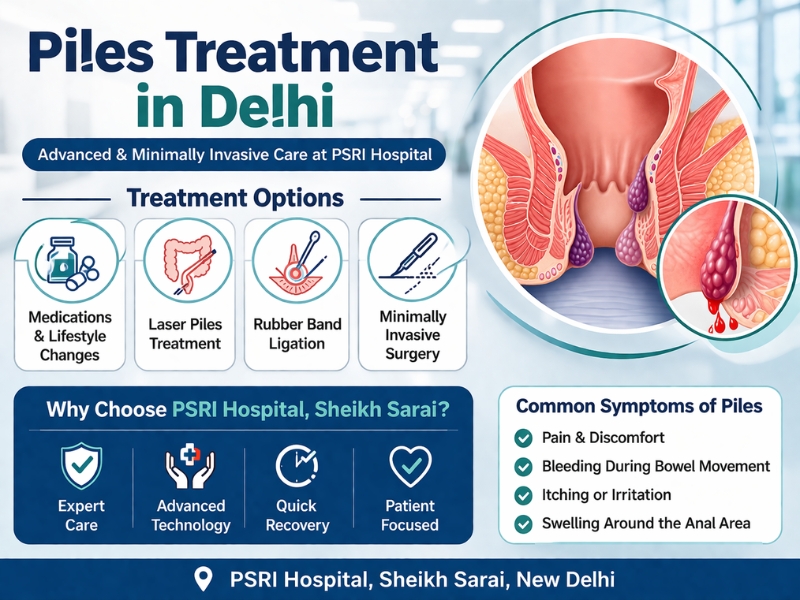
Doctors recommend different treatments depending on the stage and severity:
- Lifestyle and dietary changes (fiber-rich diet, hydration)
- Medications (ointments, pain relief medicines)
- Non-surgical procedures
- Rubber band ligation
- Sclerotherapy
- Infrared coagulation
- Minimally invasive surgery
- Laser piles treatment
- Stapler surgery
- Traditional surgery (Hemorrhoidectomy)
Each option aims to reduce symptoms and prevent recurrence.
Benefits of Piles Treatment
Proper piles treatment offers several advantages:
- Relieves pain and discomfort
- Reduces swelling and bleeding
- Improves bowel movement
- Prevents complications
- Enhances quality of life
- Allows faster recovery with modern techniques
Additionally, early treatment helps avoid the need for major surgery.
Cost of Piles Treatment in Delhi
The cost of piles treatment in Delhi depends on the type of treatment, severity of the condition, hospital facilities, and patient health.
Moreover, minimally invasive treatments may cost more initially but reduce recovery time and hospital stay.
Cost varies as per hospital standards, treatment complexity, and patient condition.
Therefore, patients should consult PSRI Hospital for a personalized cost estimate.
Procedure of Piles Treatment
The treatment process typically follows these steps:
- Medical Evaluation
The doctor examines symptoms and medical history. - Diagnosis
Physical examination and tests confirm the severity. - Treatment Selection
The doctor chooses medication, non-surgical, or surgical treatment. - Procedure
Minimally invasive or surgical procedure is performed if required. - Recovery Care
Patients receive guidance on diet and hygiene. - Follow-Up
Regular check-ups ensure proper healing.
Who Should Get This Treatment
Patients should consider piles treatment if they:
- Experience pain during bowel movements
- Notice bleeding from the rectum
- Have swelling or itching in the anal area
- Suffer from chronic constipation
- Do not improve with home remedies
However, the doctor decides the best treatment after proper evaluation.
Why Choose PSRI Hospital
Patients prefer PSRI Hospital for piles treatment because of its advanced care and expert team.
Moreover, key benefits include:
- Expert care by Dr. Prashant Kumar
- Advanced laser and minimally invasive treatments
- High safety and hygiene standards
- Modern diagnostic facilities
- Personalized treatment approach
- Experienced medical team
Therefore, patients receive safe, effective, and comfortable treatment.
FAQs
1. What is the best treatment for piles?
The best treatment depends on severity. Mild cases need medication, while severe cases may require surgery.
2. Is piles treatment painful?
Modern treatments like laser surgery cause minimal pain.
3. How long does recovery take?
Recovery usually takes a few days to weeks depending on the procedure.
4. Can piles be treated without surgery?
Yes, early-stage piles can be treated with medication and non-surgical methods.
5. When should I see a doctor for piles?
You should consult a doctor if you experience bleeding, pain, or persistent discomfort.