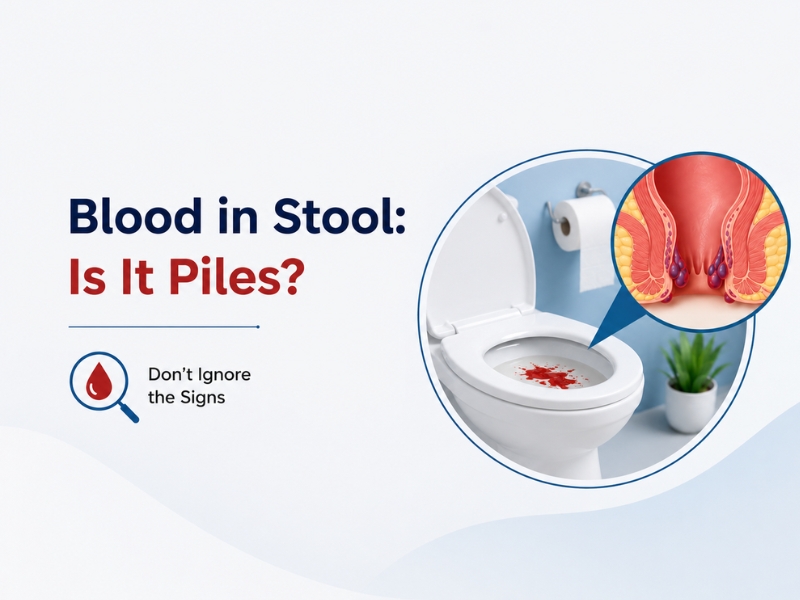
Seeing blood during or after passing stool can be frightening for many people. Some ignore it because they feel embarrassed, while others assume it is only piles and delay medical consultation.
But blood in stool should never be ignored.
Sometimes the reason may be simple and treatable, while in other cases it could be a sign of a more serious digestive problem that needs proper attention.
Dr. Prashant Kumar, New Delhi, regularly treats patients with piles, fissure, fistula, and other colorectal problems using advanced minimally invasive treatment options.
Understanding the warning signs early can help patients get timely treatment and avoid future complications.
Is Blood in Stool Always Piles?
No, not always.
Many people believe bleeding during stool automatically means piles. While piles are one of the common reasons, there can be other causes too.
The important thing is to understand:
- How often the bleeding happens
- Whether there is pain
- How much blood is visible
- Whether other symptoms are also present
Ignoring repeated bleeding for weeks or months can delay proper diagnosis.
Common Causes of Blood in Stool
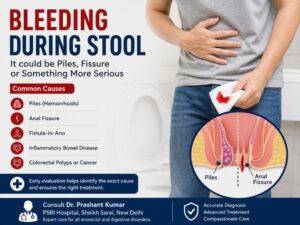
1. Piles
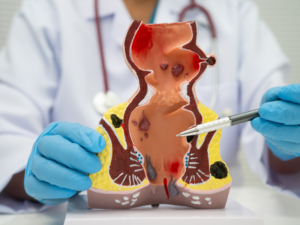
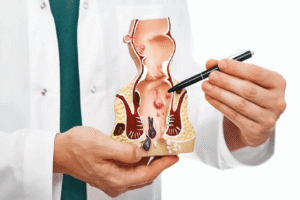
Piles are swollen veins around the lower part of the rectum. They are very common in people who:
- Sit for long hours
- Have constipation
- Strain during stool
- Eat low-fiber food
Common signs include:
- Bright red blood after stool
- Discomfort while sitting
- Itching
- Swelling near the anal area
Many patients in Delhi experience piles because of stressful lifestyle habits and poor eating patterns.
2. Fissure
A fissure is a small cut near the anal area that can cause sharp pain during stool.
Patients may notice:
- Burning pain
- Small amount of bleeding
- Pain after passing stool
- Fear of using the toilet because of discomfort
Fissures are commonly linked with hard stool and constipation.
3. Digestive Tract Problems
Sometimes blood in stool may come from problems inside the digestive system.
Warning signs may include:
- Frequent stomach pain
- Weakness
- Weight loss
- Long-term change in bowel habits
- Repeated bleeding
This is why medical evaluation becomes important if symptoms continue.
4. Infection or Inflammation
Some stomach infections and bowel irritation can also lead to bleeding.
Patients may experience:
- Loose motions
- Stomach cramps
- Fever
- Mucus in stool
These symptoms should not be ignored if they continue for several days.
Warning Signs You Should Never Ignore
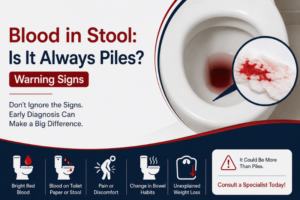
You should consult a doctor immediately if:
- Bleeding happens repeatedly
- Blood amount increases
- You have severe pain
- Stool habits suddenly change
- You feel weak or tired often
- There is unexplained weight loss
- You notice bleeding without pain
Many patients delay treatment because they feel uncomfortable discussing these symptoms. However, early diagnosis often makes treatment easier.
Why Early Consultation Is Important
Blood in stool is a symptom, not a disease itself.
The real cause must be identified properly.
Early consultation helps:
- Prevent worsening symptoms
- Reduce discomfort
- Identify serious conditions early
- Plan proper treatment
- Avoid complications later
Patients should avoid self-treatment or relying only on temporary medicines without proper evaluation.
Can Lifestyle Habits Cause Piles?
Yes, daily habits play a major role.
Common lifestyle factors include:
- Sitting for long hours
- Low water intake
- Junk food
- Lack of exercise
- Constipation
- Delaying toilet habits
These habits are very common among working professionals in Delhi and New Delhi.
How Are Piles and Other Problems Treated?
Treatment depends on the actual cause and severity of symptoms.
Some patients improve with:
- Diet changes
- Better bowel habits
- Lifestyle correction
Others may need minimally invasive treatment for long-term relief.
Advanced treatment options today help many patients recover faster with less discomfort and quicker return to normal routine.
Dr. Prashant Kumar, New Delhi, provides patient-focused care for piles, fissure, fistula, colorectal conditions, and minimally invasive surgery.
Tips to Reduce Bleeding and Discomfort
Some simple daily habits may help:
- Drink enough water
- Eat fiber-rich food
- Avoid straining during stool
- Exercise regularly
- Avoid sitting continuously for long hours
- Do not ignore constipation
However, repeated bleeding should always be checked by a specialist.
Why Choose Dr. Prashant Kumar in New Delhi?
Dr. Prashant Kumar is known for advanced laparoscopic and minimally invasive surgical care in New Delhi.
Patients trust him for:
- Personalized treatment planning
- Patient-friendly consultation
- Advanced surgical expertise
- Focus on faster recovery
- Modern minimally invasive procedures
He is associated with advanced surgical care at PSRI Hospital, New Delhi.
To know more or book an appointment, visit:
https://drprashantsurgeon.com/
Frequently Asked Questions (FAQs)
Is blood in stool always caused by piles?
No. While piles are common, blood in stool may also happen because of fissure, digestive problems, infections, or other conditions.
When should I worry about blood in stool?
You should consult a doctor if bleeding happens repeatedly, increases, or comes with pain, weakness, or stomach discomfort.
Can constipation cause bleeding during stool?
Yes. Hard stool and straining may lead to piles or fissure, which can cause bleeding.
Is bleeding without pain normal?
Bleeding without pain should still be evaluated because the exact cause needs proper diagnosis.
Can piles improve without surgery?
Some early cases improve with lifestyle and diet changes, while others may require treatment for long-term relief.
Book Your Consultation Today
If you are noticing blood during stool, do not ignore the warning signs.
Early consultation can help identify the cause and prevent future complications.
Consult Dr. Prashant Kumar, trusted specialist for piles, colorectal problems, and minimally invasive surgery in New Delhi.
Visit:
https://drprashantsurgeon.com/
Call:
+91 8178785528
Location:
PSRI Hospital, New Delhi