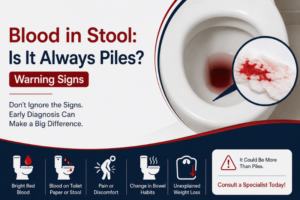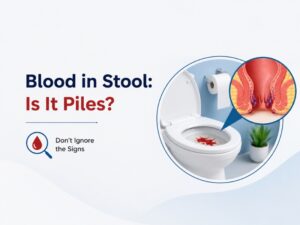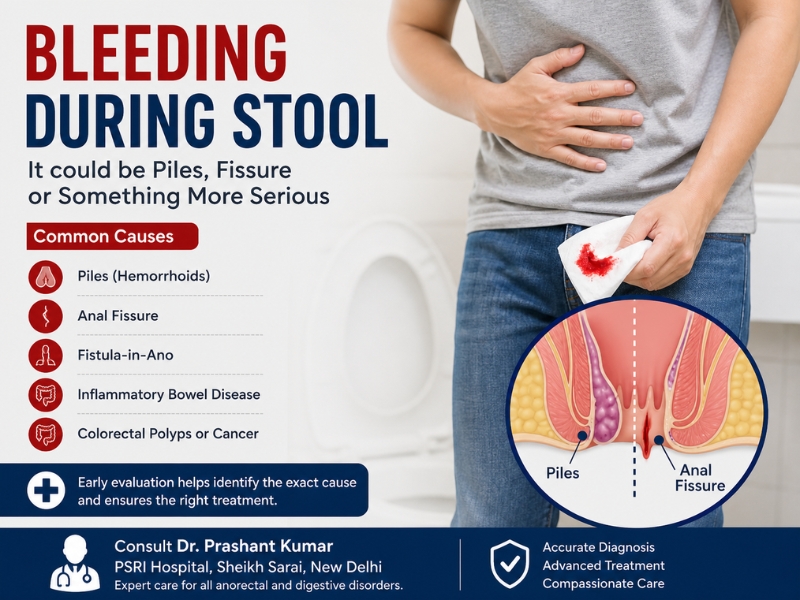
Bleeding during stool is a common symptom that many people ignore due to embarrassment or fear. In many cases, the cause may be piles or an anal fissure, but sometimes it can indicate a more serious digestive condition. Early evaluation helps identify the exact cause and prevents complications.
At Dr. Prashant Kumar’s clinic at PSRI Hospital, Sheikh Sarai, New Delhi, patients with rectal bleeding are evaluated carefully with modern diagnostic methods and personalized treatment plans.
Top Clinic for Rectal Bleeding Evaluation in New Delhi
Dr. Prashant Kumar at PSRI Hospital, Sheikh Sarai, New Delhi, provides diagnosis and treatment for conditions causing bleeding during stool. Patients with piles, fissures, fistula, inflammatory bowel disease, and colorectal conditions are treated using evidence-based approaches.
Why patients seek expert consultation early:
- Accurate diagnosis of the bleeding source
- Differentiation between piles, fissure, and serious bowel disease
- Access to advanced diagnostic investigations
- Safe medical and surgical treatment options
- Comprehensive gastrointestinal care under specialist supervision
Persistent bleeding should never be ignored, especially if associated with pain, weight loss, constipation, or changes in bowel habits.
Common Causes of Bleeding During Stool
1. Piles (Hemorrhoids)
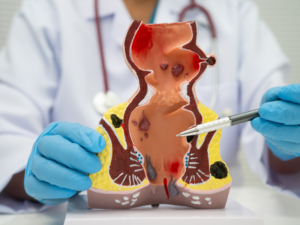
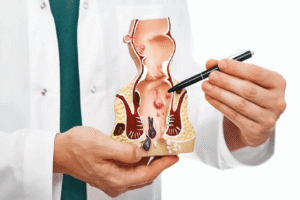
Piles are swollen veins in the rectum or anus that may bleed during bowel movements.
Common symptoms:
- Bright red blood after passing stool
- Itching around the anus
- Swelling or lump near the anal area
- Discomfort while sitting
- Mucus discharge in some cases
Bleeding from piles is usually painless unless thrombosis occurs.
2. Anal Fissure
An anal fissure is a small tear in the lining of the anus.
Common symptoms:
- Sharp pain during stool passage
- Burning sensation after bowel movement
- Small amount of bright red bleeding
- Fear of passing stool due to pain
Fissures are commonly linked to constipation and hard stools.
3. Fistula-in-Ano
A fistula is an abnormal tract between the anal canal and skin.
Symptoms may include:
- Recurrent pus discharge
- Pain and swelling
- Occasional bleeding
- Skin irritation around the anus
4. Inflammatory Bowel Disease (IBD)
Conditions such as ulcerative colitis or Crohn’s disease may cause rectal bleeding.
Associated symptoms:
- Loose stools
- Abdominal pain
- Weight loss
- Fatigue
- Mucus in stool
5. Colorectal Polyps or Cancer
Although less common, rectal bleeding can sometimes indicate serious colorectal disease.
Warning signs:
- Blood mixed with stool
- Unexplained weight loss
- Persistent change in bowel habits
- Anemia
- Family history of colon cancer
Early diagnosis significantly improves outcomes.
Symptoms That Need Immediate Medical Attention
Consult a specialist immediately if you experience:
- Heavy rectal bleeding
- Black-colored stool
- Severe abdominal pain
- Dizziness or weakness
- Sudden weight loss
- Persistent constipation with bleeding
- Recurrent bleeding episodes
- Fever with anal pain or swelling
Types of Treatment for Bleeding During Stool
Treatment depends on the underlying cause identified during examination.
Medical Management
- Stool softeners
- High-fiber diet advice
- Hydration improvement
- Anti-inflammatory medicines
- Pain-relief medications
- Topical creams and ointments
Minimally Invasive Procedures
- Rubber band ligation for piles
- Sclerotherapy
- Infrared coagulation
Surgical Treatment
- Hemorrhoidectomy for advanced piles
- Lateral sphincterotomy for fissure
- Fistula surgery
- Colorectal surgery if required
The treatment plan is decided after detailed clinical assessment.
Benefits of Early Diagnosis and Treatment
- Relief from pain and discomfort
- Prevention of chronic constipation complications
- Reduced risk of severe bleeding
- Faster healing of fissures
- Improved bowel habits
- Better quality of life
- Early detection of serious gastrointestinal disease
- Reduced chances of emergency surgery
Cost of Treatment in New Delhi
Cost varies as per hospital standards, treatment complexity, and patient condition.
The final treatment expense depends on:
- Severity of the condition
- Need for investigations
- Medical or surgical management
- Hospital stay requirements
- Technology used during treatment
A specialist consultation helps determine the most suitable treatment plan.
Procedure of Diagnosis and Treatment
Step 1: Medical History
The doctor evaluates:
- Nature of bleeding
- Pain during stool
- Bowel habits
- Dietary history
- Family history of colorectal disease
Step 2: Physical Examination
Examination may include:
- Inspection of anal region
- Digital rectal examination
- Assessment for piles or fissure
Step 3: Diagnostic Tests
If required, investigations may include:
- Proctoscopy
- Colonoscopy
- Blood tests
- Stool examination
- Imaging studies
Step 4: Treatment Planning
Treatment is customized based on:
- Cause of bleeding
- Severity of symptoms
- Patient age and medical condition
Step 5: Follow-Up Care
Patients receive guidance regarding:
- Diet modification
- Fiber intake
- Hydration
- Lifestyle improvement
- Prevention of recurrence
Who Should Get Evaluated for Rectal Bleeding?
You should consult a specialist if you have:
- Bleeding during or after stool passage
- Painful bowel movements
- Chronic constipation
- Recurrent piles symptoms
- Family history of colon disease
- Blood mixed with stool
- Long-standing digestive issues
- Unexplained weakness or anemia
Even minor bleeding should not be ignored if it occurs repeatedly.
Why Choose Dr. Prashant Kumar at PSRI Hospital, Sheikh Sarai, New Delhi?
- Experienced evaluation of anorectal disorders
- Evidence-based treatment approach
- Advanced diagnostic support
- Personalized patient care
- Focus on minimally invasive treatment when suitable
- Comprehensive gastrointestinal management
- Safe and hygienic hospital environment
- Detailed follow-up and recovery guidance
Patients receive proper counseling regarding both medical and surgical options based on their condition.
FAQs
1. Is bleeding during stool always due to piles?
No. Bleeding may occur due to fissure, fistula, infection, inflammatory bowel disease, or colorectal disease.
2. What color is blood in piles?
Piles usually cause bright red bleeding during or after bowel movement.
3. Can constipation cause bleeding?
Yes. Hard stool can cause fissures and bleeding during stool passage.
4. When should I worry about rectal bleeding?
Seek medical evaluation if bleeding is recurrent, heavy, associated with pain, weight loss, or change in bowel habits.
5. Can piles heal without surgery?
Early-stage piles may improve with medicines, dietary changes, and minimally invasive procedures. Advanced cases may require surgery.