Minimally invasive surgery vs open surgery is an important comparison for patients who need surgical treatment in Delhi. At PSRI Hospital, patients receive advanced surgical care under Dr. Prashant Kumar, who specializes in modern surgical techniques.
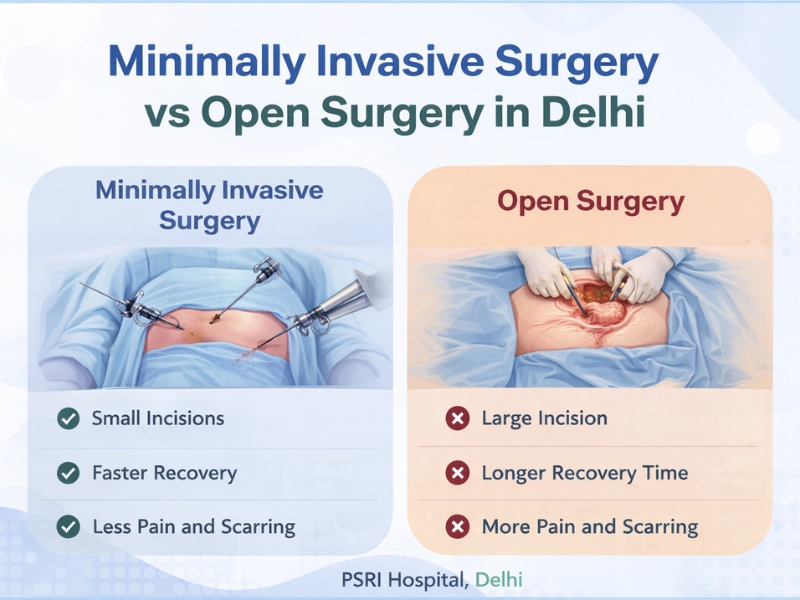
Moreover, minimally invasive surgery uses small incisions and advanced tools, while open surgery involves a larger incision for direct access. As a result, recovery time, pain level, and hospital stay can differ significantly between the two approaches.
Top Clinic for Surgical Treatment in Delhi
PSRI Hospital is one of the leading healthcare centers in Delhi for both minimally invasive and open surgical procedures. The hospital provides advanced operation theatres, modern equipment, and high safety standards.
In addition, Dr. Prashant Kumar brings strong clinical expertise in evaluating patients and selecting the most appropriate surgical approach. He carefully assesses each case to ensure safe and effective outcomes.
Furthermore, the hospital focuses on patient comfort, faster recovery, and evidence-based surgical care.
Types of Surgery Approaches
1. Minimally Invasive Surgery
- Laparoscopic surgery
- Robotic-assisted surgery
- Endoscopic procedures
- Keyhole surgery techniques
2. Open Surgery
- Traditional abdominal surgery
- Large incision procedures
- Emergency surgical interventions
- Complex reconstructive surgeries
Both methods treat similar conditions, but the approach differs based on severity and medical need.
Key Differences Between Minimally Invasive and Open Surgery
1. Size of Incision
Minimally invasive surgery uses small cuts, while open surgery requires a large incision.
2. Pain Level
Minimally invasive techniques generally cause less postoperative pain. However, open surgery may involve more discomfort due to tissue exposure.
3. Recovery Time
Patients recover faster after minimally invasive surgery. In contrast, open surgery requires a longer healing period.
4. Hospital Stay
Minimally invasive procedures often allow early discharge. Open surgeries usually need extended hospitalization.
5. Scarring
Minimally invasive surgery leaves minimal scars. Open surgery results in more visible scarring.
6. Surgical Precision
Minimally invasive surgery uses cameras and advanced tools for precision. Open surgery allows direct manual access.
Benefits of Minimally Invasive Surgery
Minimally invasive surgery offers several patient advantages:
- Smaller incisions and reduced scarring
- Faster recovery and mobility
- Lower infection risk
- Less blood loss during surgery
- Shorter hospital stay
- Quicker return to daily activities
Additionally, it improves patient comfort during the recovery phase.
Benefits of Open Surgery
Although minimally invasive surgery is preferred, open surgery still plays an important role:
- Better access for complex conditions
- Useful in emergency cases
- Suitable for large tumors or complications
- Allows direct visualization of organs
- Reliable for high-risk or complicated surgeries
Therefore, doctors choose open surgery when minimally invasive methods are not suitable.
Cost of Surgery in Delhi
The cost of both minimally invasive and open surgery in Delhi depends on several factors such as procedure type, hospital facilities, surgeon expertise, and patient condition.
Moreover, minimally invasive surgery may reduce overall recovery-related expenses due to shorter hospital stays. However, open surgery may be required in complex cases, which can affect total treatment cost.
Cost varies as per hospital standards, treatment complexity, and patient condition.
Therefore, patients should consult PSRI Hospital for a personalized treatment plan and cost estimate.
Procedure Overview
Minimally Invasive Surgery Process
- Doctor evaluates patient condition
- Anesthesia is administered
- Small incisions are made
- Camera and instruments are inserted
- Surgery is performed with precision tools
- Incisions are closed
- Recovery monitoring begins
Open Surgery Process
- Medical assessment and diagnosis
- General anesthesia administration
- Large incision is made
- Direct surgical correction is performed
- Internal repair is completed
- Wound closure with stitches
- Post-operative care and recovery
Who Should Get This Treatment
Patients may require either approach depending on their condition:
- Patients with gallbladder, appendix, or hernia issues
- Individuals with complex abdominal conditions
- Emergency surgical cases
- Patients requiring tumor removal or reconstruction
- Cases where laparoscopic surgery is not suitable
However, only a qualified surgeon can decide the safest method after evaluation.
Why Choose PSRI Hospital
Patients prefer PSRI Hospital because it offers advanced surgical care and patient-focused treatment.
Moreover, key advantages include:
- Expert care under Dr. Prashant Kumar
- Advanced minimally invasive surgical technology
- High safety and infection control standards
- Skilled surgical and nursing team
- Modern diagnostic support
- Personalized treatment planning
Therefore, patients receive safe, effective, and result-oriented surgical care.
FAQs
1. Which is better: minimally invasive or open surgery?
It depends on the patient’s condition. Minimally invasive surgery is preferred when possible.
2. Is minimally invasive surgery safe?
Yes, it is safe when performed by experienced surgeons using modern equipment.
3. Why do doctors still perform open surgery?
Doctors use open surgery for complex or emergency cases where direct access is required.
4. How long does recovery take?
Minimally invasive surgery heals faster, while open surgery requires more recovery time.
5. Can every patient undergo minimally invasive surgery?
No, the doctor decides based on medical evaluation and condition severity.